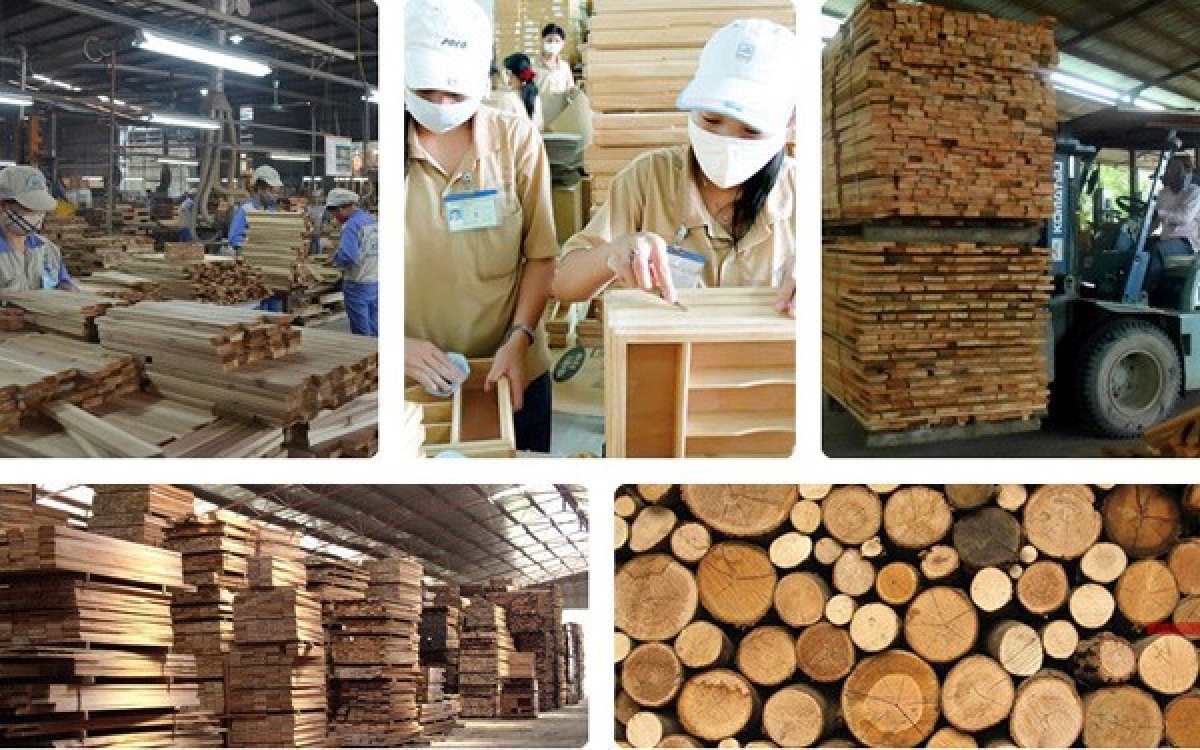


 Production of wood pellets at Luong Son Trading Joint Stock Company (Phu Tho).
Currently, wood products and wood products of Vietnamese enterprises have been exported to many international markets, including pellets produced from wood by-products. This is a product chosen by many developed countries to replace fuels that cause environmental damage.
The potential of this industry is still huge, requiring domestic manufacturers to promote quality and reduce product costs to gain competitive advantages...
Wood pellets are products made from wood chips, wood chips and branches, by-products from different stages in wood production and processing. According to experts of the Vietnam Timber and Forest Products Association (VIFOREST), foreign importers import wood pellets for biofuel fuel, barn desiccant and fertilizer for plants because raw materials material made from 100% organic matter.
Great potential
With the meaning of environmental protection and reuse of surplus raw materials to create new useful fuels, the tablet market is increasingly expanding, especially in developed countries of the EU and Korea, Japan. Copy. Currently, wood pellets products are also being applied with international standards such as: Sustainable Forest Management Certification (FSC-FM), Chain of Custody Certification (FSC-CoC), Certified Wood control (FSC-CW) for enterprises to control their raw materials through risk assessment of raw material areas according to international standards. These are also the standards that importers are asking Vietnamese wood businesses to apply.
In fact, according to managers, wood by-products for the production of pellets that are qualified for export by domestic enterprises are very large. One of the strengths that directly contributes to the formation and development of the wood pellet industry in Vietnam is due to the abundant source of input materials, which are created from wood by-products of the wood processing industry. Input sources of wood for making this item include sawdust, shavings, twigs and tops of small diameter plantation timber. On the other hand, the tablet processing facility does not require investment in large and complex management technology, creating opportunities for many businesses to participate in the production stage. Vietnam has a geographical advantage with the source of raw materials for tablet production located near export seaports, convenient for transportation. These are the basic advantages for the wood pellet industry to develop strongly in the coming time. In the world market, wood pellets are widely used in both daily life and industrial production. In addition, the use of organic renewable raw materials has contributed to environmental protection and does not pose any danger to the health of users. Therefore, the export potential of wood pellet products is considered to have great potential.
Enhance export value
Up to now, wood pellets have become one of the important export items of Vietnam. Recently, the annual export output reached about 3 million tons, equivalent to 350 million USD in turnover. Korea and Japan are currently two important import markets, accounting for more than 90% of enterprises' annual export volume of wood pellets… The Korean market has a larger scale than the Japanese market. However, the level of stability in the Japanese market is higher than the export price to Korea by about 20 USD to 30 USD/ton.
According to information from some exporters, the current export price to the Korean market is low because this market applies an auction mechanism when buying products. While the purchasing mechanism in the Japanese market does not follow the form of an auction, it depends directly on the agreement between the buyer and the seller. According to the General Department of Forestry, the country has about 80 factories producing wood pellets. However, the survey information of experts from Forest Trends shows that the number of enterprises directly involved in the production and export of tablets may be much larger. The Southeast region, the center of wood processing facilities, is home to the largest number of pellet production facilities in the country. The reason pellet production facilities are concentrated in this area is because wood by-products from wood processing facilities are brought in as input materials for the production of pellets. The wood pellet industry currently has room for sustainable development. That is, the demand for tablets in importing countries will continue to increase in the future. According to some exporters, the amount of tablets in this market will be able to triple in the coming years. If Vietnam's production capacity is kept at the current level, the supply and demand for this item will balance in the next 2-3 years. In addition, the tablet industry has the potential to increase the proportion of FSC certified products, which can be achieved through cooperation between export processors and forest growers. to generate certified wood sources.
Dr. To Xuan Phuc, an expert from Forest Trends, said that despite the great potential, the wood pellet production and export industry currently has a number of limitations. That is, input materials have not been strictly controlled both in terms of quality and legal basis. Some processing facilities use mixed materials, affecting product quality. The supply of input materials with sustainable forest management certificates (FSC) is still small, while the demand of the export market for certified products is increasing. Therefore, strictly controlling the quality of input materials, creating linkages through representative organizations and rising up of enterprises in accessing modern technology, to create high quality products. , low cost ... are the current urgent requirements for enterprises producing export wood pellets ...